Many years ago (approximately 1991) I played around with building a Tesla Turbine to test the principle of operation. It never occurred to me that others might be interested in making something similar. The basic components are part of any hard disk drive. Rather than throwing away the next hard drive that goes bad, consider giving it new life as a Tesla-like turbine. Here is what I did…
Original project notes
The project, step by step
The descriptions below preserve the original page's sequence as a historical record. Images are linked by their original relative filenames.
01
Start with an old hard disk drive
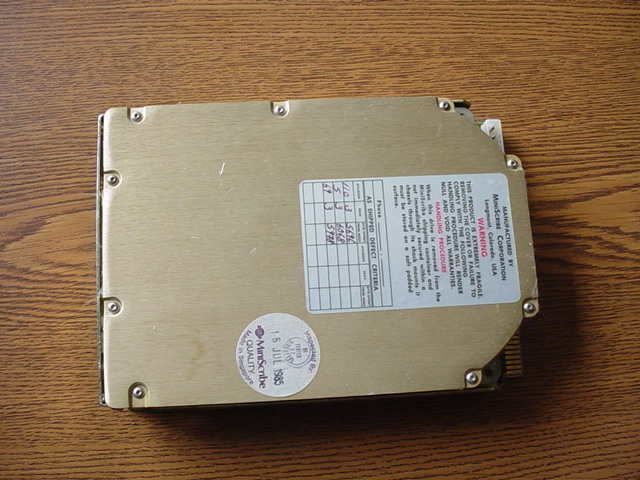
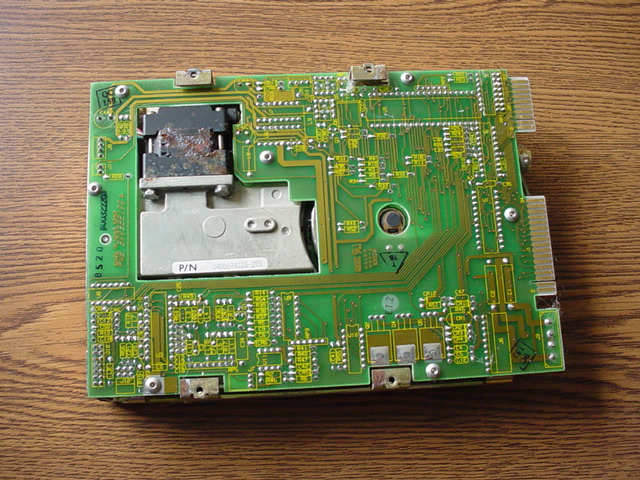
Start with almost any old hard disk drive. These can be obtained almost free at computer salvage companies, or the next time you fry one in your computer. In this case, I had a 1/2 height, 5", 20 Mb drive lying around. (The old full height drives might work even better…)
02
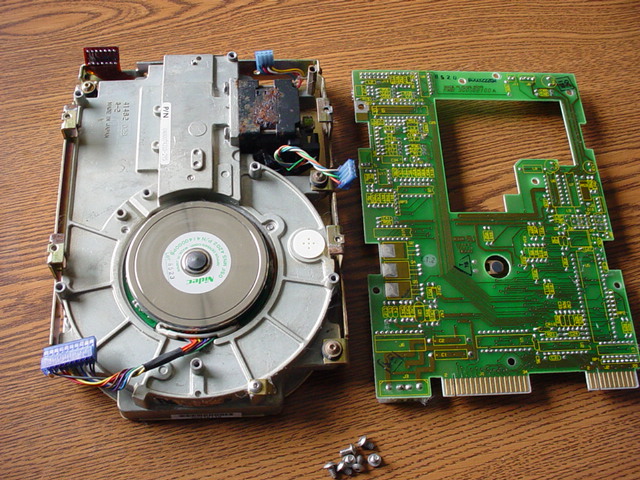
Remove the cover screws
Remove the screws that hold the cover in place. These are usually "star" screws, and if you don't have "star" drivers that will fit, you may be able to use Allen wrenches.
03
Remove platter screws
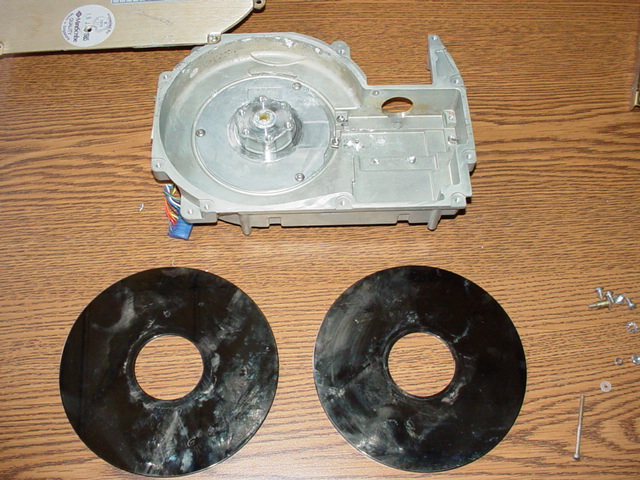
The original page next describes removing the screws that secure the hard disk platters in place.
04
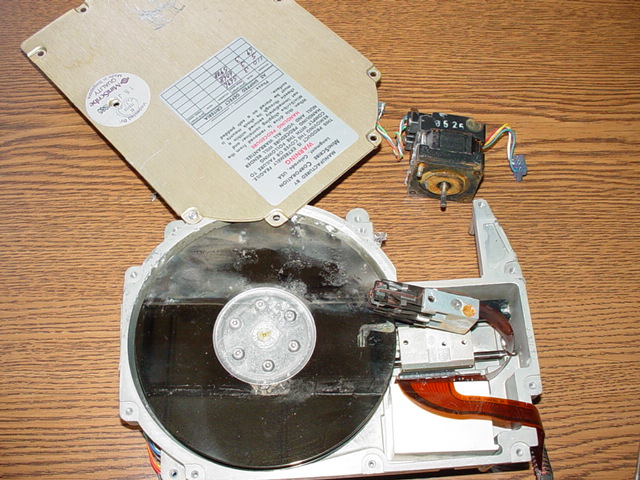
Remove internal components
The original page describes removing the magnetic head assembly, filters, and other internal parts from inside the case.
05
Replace the platters
The original page says to replace the disk platters and secure them using the original screws.
06
Replace the cover
The original page says to replace the cover and tighten the screws. Note that the case was not designed to contain pressure.
07
Air-input opening (original description)
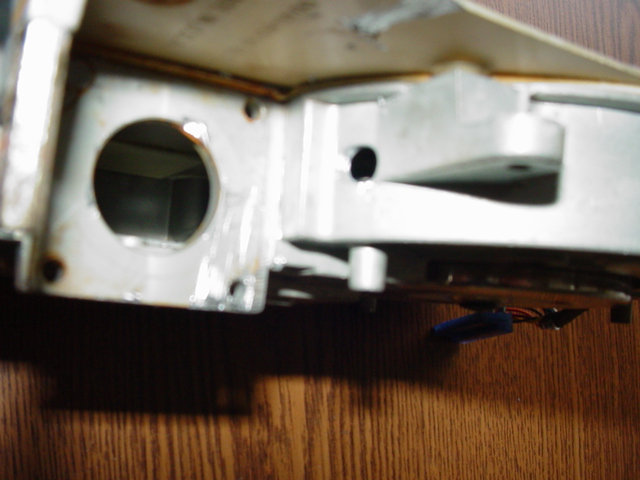
The original page describes drilling a hole for air input and notes that only a couple of positions had been tried. This is included as a record of the original account, not as a recommendation to pressurize the assembly.
08
Motor wiring (original description)
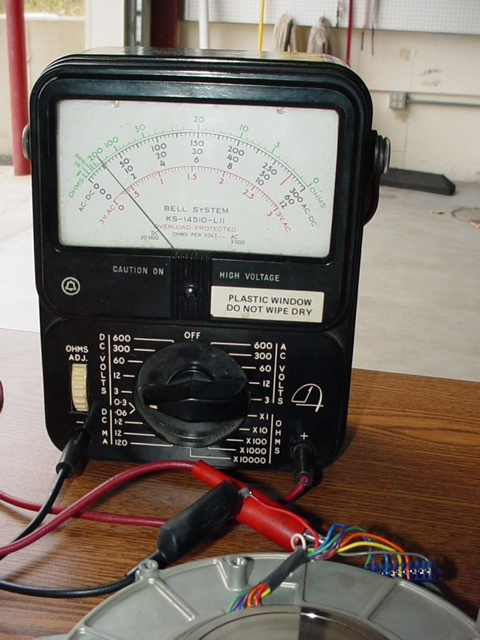
The original page discusses identifying the lines used to send power to the disk-drive motor and notes that a permanent-magnet motor can act as a generator when spun without electrical input.
09
Input source (original description)
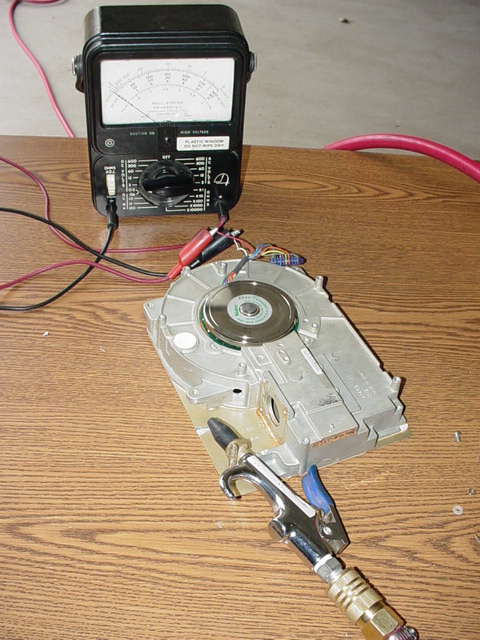
The original page says an air compressor was used to push air into the opening, and speculates that liquid or steam might also work. This is not a safe-use recommendation; pressure or steam can cause severe injury when used with an unrated enclosure.
10
Voltage measurement (original description)
The original page says that, if the motor power lines were identified correctly, a voltmeter could show that the unit was functioning.
11
Share the project
The original page ends by inviting readers to visit the author's company website: www.go-ev.com.